Maximum workplace temperature: What employers need to know
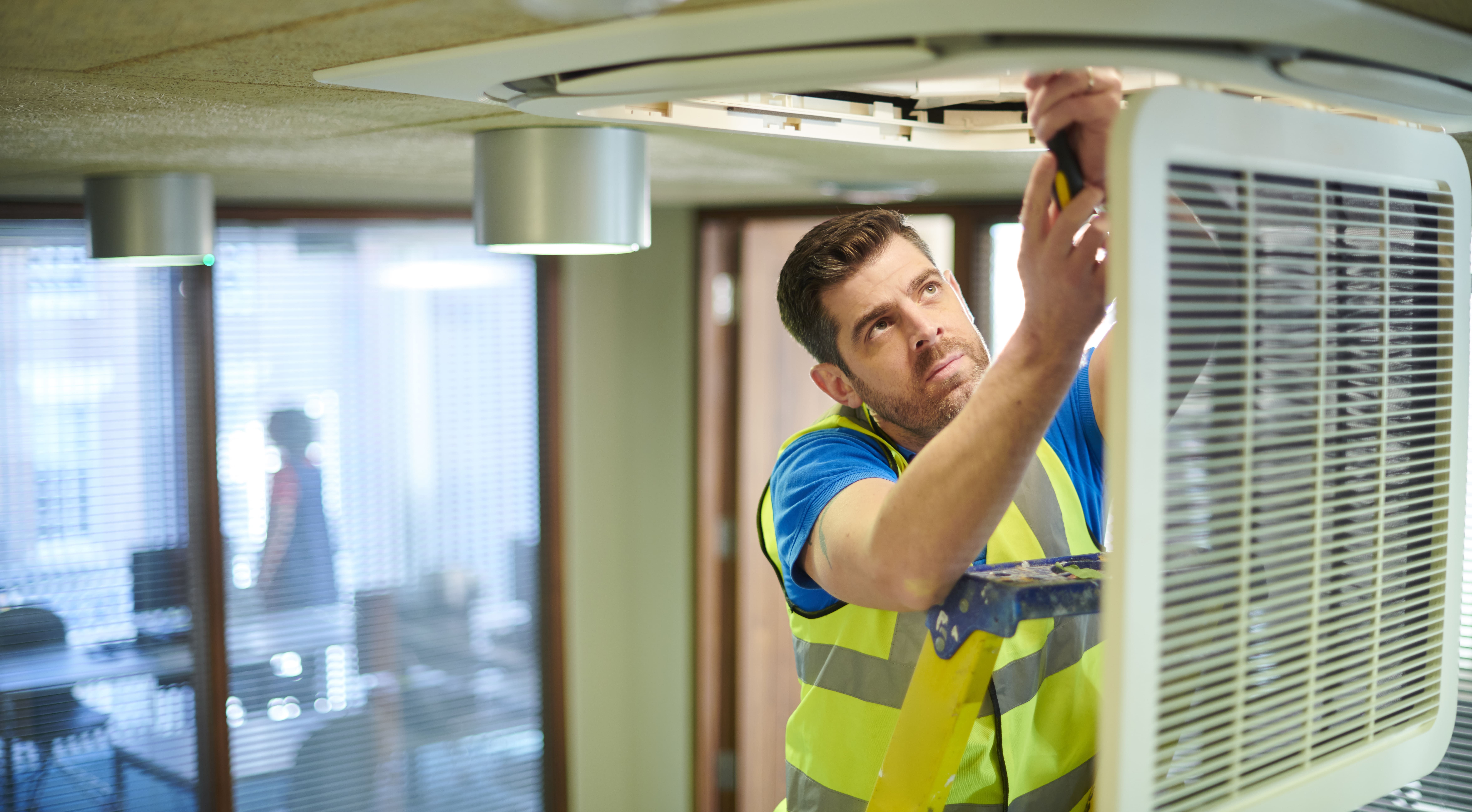
As the UK enters its third heatwave of 2026, with amber heat-health alerts issued across much of England, many employers are fielding a familiar question from staff: when is it too hot to work? The answer surprises most people. There is no temperature at which the law says work must stop.
That absence catches many employers off guard, because the assumption runs deep that a fixed threshold exists - 30°C is the figure most often cited - beyond which work must stop. No such threshold exists. What employers have instead is a broader and arguably more demanding duty: to keep the workplace at a "reasonable" temperature and to manage the health risks that heat creates [1]. A thermometer reading tells you very little on its own. What matters is whether staff are safe, comfortable enough to work effectively, and protected when conditions turn genuinely dangerous.
This article explains why no maximum exists, what "reasonable" means in practice, how to judge thermal comfort properly, and the concrete steps that keep staff healthy and working through hot spells - whether they sit at a desk, stand in a warehouse, or work outdoors.
Summary
- There is no legal maximum workplace temperature in the UK, and no temperature at which work must legally stop.
- Employers must ensure indoor workplaces are maintained at a reasonable temperature during working hours and must assess and control any risks arising from excessive heat.
- For outdoor workers, employers should consider providing shaded rest areas, access to drinking water, flexible working hours where practicable, and employee information on recognising the signs of heat-related illness.
- Guidance sets a minimum of around 16°C for sedentary work and 13°C for physical work, but there is no equivalent ceiling.
- "Thermal comfort" is the real test - HSE notes that this is often best judged by the level of employee dissatisfaction rather than by a single thermometer reading alone.
- Six factors determine comfort: air temperature, radiant heat, humidity, air movement, how hard people are working, and what they are wearing.
- A risk assessment is the starting point; from there, practical low-cost controls usually solve most problems.
- Some workers face higher risk - including pregnant employees, older staff, and those with certain health conditions or medications.
- Change may be coming: the Climate Change Committee and the TUC are both pressing the government for maximum-temperature rules, and a review of the guidance is underway.
Why there is no maximum temperature
The absence of a maximum can seem like an obvious gap. If guidance sets a recommended minimum, why not a maximum to match?
The reason lies in how greatly workplaces differ. A temperature that would be alarming in an open-plan office is entirely normal in a commercial kitchen, a foundry, a bakery, or a glasshouse. A single national ceiling pitched for a call centre would either shut down legitimate industries or be set so high that it protected no one. Rather than impose a figure that suits nobody, the framework asks employers to keep conditions "reasonable" for their particular workplace and to control the risks that arise [1].
This is why guidance offers a minimum but not a maximum. For indoor workplaces, the recommended floor is normally at least 16°C for sedentary work such as office tasks, or around 13°C where the work is physically demanding [2]. These are guideline figures rather than hard limits, and there is deliberately no figure at the top end. The duty to act does not switch on at a set reading - it applies whenever heat could foreseeably cause harm.
For employers, this represents a crucial shift in thinking. The question is not what the thermometer reads, but whether conditions are reasonable and whether the risk has been managed.
Outdoor working
Employees working outdoors may face additional risks from direct sunlight, radiant heat, and prolonged physical exertion. Employers should consider providing shaded rest areas, increasing access to drinking water, adjusting working hours where practicable, and ensuring workers understand the signs of heat-related illness.
Thermal comfort: The test that actually matters
The concept that replaces a maximum temperature is "thermal comfort" - and it is worth understanding properly, because it reframes the whole problem.
Thermal comfort describes how satisfied people are with the temperature around them. The official guidance puts it memorably: thermal comfort is not measured by the temperature of the room, but by how many of your employees are complaining of thermal discomfort [3].
This matters because comfort depends on far more than air temperature. Six factors combine to determine whether a space feels comfortable [3]:
- air temperature - the figure most people focus on, but only one part of the picture
- radiant heat - warmth radiating from machinery, ovens, or direct sunlight through glass, which can make a space feel far hotter than the air temperature suggests
- humidity - high humidity stops sweat evaporating, which is how the body cools itself, making moderate temperatures feel oppressive
- air movement - a breeze or fan aids cooling; still, stagnant air traps heat against the body
- work rate - physical effort generates body heat, so the same room is far hotter for someone lifting boxes than for someone typing
- clothing - uniforms, protective equipment, and heavy fabrics all trap heat and limit the body's ability to cool
The practical lesson is that two workplaces at the same air temperature can pose completely different levels of risk. A humid, still warehouse where staff do heavy lifting in protective gear is a far greater concern than an airy office at the same reading.
Why heat is a genuine safety issue, not just discomfort
There is a temptation to treat workplace heat as a question of comfort rather than safety. That underestimates it.
When people feel uncomfortably hot, their ability to make good decisions and perform tasks deteriorates, and they are more likely to behave unsafely - cutting corners to escape the heat, or wearing protective equipment improperly because it is uncomfortable [3]. In physically demanding or hazardous settings, that drop in judgement and compliance is where accidents happen. The CIPD, the professional body for HR, makes the same point about everyday roles: sustained heat causes fatigue and reduced concentration, and the effect is felt most acutely by those in safety-critical jobs such as driving or construction [11].
Beyond performance, heat carries direct health risks. Heat exhaustion brings heavy sweating, dizziness, headache, muscle cramps, and nausea. Left unmanaged, it can progress to heatstroke - a medical emergency marked by confusion, a very high body temperature, or loss of consciousness, which requires an immediate 999 call [9]. These are not remote possibilities during a heatwave; they are foreseeable outcomes that employers are expected to plan for.
The wider context makes the point sharper. The UK recorded a temperature of 40.3°C in July 2022, the first time 40°C had been reached [10]. That summer's heat was associated with more than 3,000 excess deaths across England and Wales - a population-wide figure rather than a workplace one, but a measure of how dangerous extreme heat has become [8]. The country saw four heatwaves in the summer of 2025, each triggering official heat-health alerts [7]. Extreme heat is no longer an occasional freak event to be weathered - it is a recurring planning scenario, and workplaces that prepare for it fare considerably better than those that improvise each time.
A practical framework for managing workplace heat
Managing heat does not require expensive engineering in most workplaces. It requires a considered process and a set of sensible controls. The approach below moves from assessment to action.
1. Start with a risk assessment
Heat is one of the risks an employer should assess, indoors or outdoors. A heat risk assessment identifies where high temperatures are likely, who is most exposed, and what could go wrong. It should weigh the environmental factors (temperature, humidity, radiant heat, air movement), the work factors (how strenuous the task is, how long shifts run, what protective clothing is required), and the individual factors (who among your staff may be more vulnerable) [4]. This assessment is the foundation everything else builds on, and it should be revisited when conditions change rather than written once and filed away.
2. Apply practical controls
Most heat problems are solved with straightforward, low-cost measures. The aim is to reduce the temperature, improve air movement, lower the physical demand, and give people the means to cool down [5]. Effective options include:
- improving ventilation - opening windows, using fans, or running air conditioning where available
- shading windows with blinds or reflective film to cut radiant heat from the sun
- relaxing dress codes so staff can wear cooler, lighter clothing
- providing ready access to cool drinking water and encouraging regular hydration
- introducing more frequent breaks, ideally in a cooler area away from the heat source
- rescheduling the most strenuous tasks to the cooler parts of the day
- moving workstations away from direct sunlight or hot machinery
- allowing flexible or remote working where the role permits, so staff avoid the hottest conditions entirely.
Employers are not expected to apply every measure in every workplace. The expectation is that heat risk has been assessed and suitable controls have been considered and put in place - a proportionate response to a foreseeable hazard.
3. Pay attention to clothing and protective equipment
Protective equipment is a common and overlooked cause of heat stress. It adds weight, traps body heat, and stops sweat evaporating. Where protective gear is essential it cannot simply be removed, but employers can lighten the load: encouraging staff to take equipment off as soon as a task is finished so trapped heat can disperse, considering lighter or breathable alternatives, and in some settings looking at specialist clothing with built-in cooling [5]. The principle is to avoid people working hard, in heavy gear, in hot and humid conditions for long unbroken stretches.
4. Protect those most at risk
Heat does not affect everyone equally. Some staff need extra consideration - including pregnant employees, older workers, those new to a hot environment and not yet acclimatised, and people whose health conditions or medications make them more susceptible [4]. Once a worker has notified you that they are pregnant, you should carry out an individual risk assessment and make any adjustments it identifies. For others, the same reasonable adjustments that help everyone apply with extra care: more frequent breaks, access to cooler areas, reduced exertion, and a watchful eye for early symptoms.
5. Brief managers and first aiders
Controls only work if the people on the ground know what to watch for. Managers and first aiders should be able to recognise the signs of heat exhaustion and heatstroke and know what to do - move the affected person somewhere cool, give them fluids, and escalate to emergency services if serious symptoms appear. Briefing them before a heatwave, rather than during one, ensures the response is prompt.
Talking to your team
One of the simplest and most effective measures costs nothing: asking staff directly. Because comfort is subjective and varies from person to person, the people best placed to tell you whether conditions are reasonable are the ones working in them. Consulting staff on how to cope with high temperatures surfaces problems early, produces better solutions, and demonstrates that the issue is being taken seriously. The CIPD makes the same recommendation, advising that employers who speak to staff and establish their needs are best placed to keep them both comfortable and productive [11].
It also heads off the resentment that builds when people feel ignored. An employee who has been asked for their input, offered a fan, and told they can dress down responds very differently from one left to suffer while management debates whether 28°C counts as too hot - even when the temperature is identical.
What might change
The lack of a maximum temperature is increasingly contested, and employers should expect movement in this area.
The Trades Union Congress has long campaigned for legal limits, proposing that employers should be required to act once temperatures climb above 24°C and staff feel uncomfortable, and that a ceiling of 30°C - or 27°C for strenuous work - should trigger a right to stop [7]. In May 2026 the Climate Change Committee, the government's independent climate adviser, recommended that ministers set maximum-temperature rules for work to address the growing risks that heat poses to workers, though it did not propose a specific figure [8].
The government has acknowledged the issue, committing to modernise health and safety guidance on extreme temperatures, and a review of the relevant code of practice is underway with a consultation expected [6]. Nothing has changed in law yet, and any new rules would take time to arrive. But the direction of travel is clear, and employers who build sensible heat management into their practices now will be well ahead of whatever guidance eventually lands.
The bottom line
The instinct to look for a maximum temperature is understandable, but it misreads the obligation. There is no number that releases an employer from responsibility, and equally none that defines the limit of it. What exists is a continuous duty to keep conditions reasonable and to manage the risks heat creates - a duty that is met through assessment, sensible controls, and genuine attention to how staff are coping.
That is more demanding than a single threshold would be, but it is also more useful. A workplace that manages heat well is safer, more comfortable, and more productive than one waiting for a thermometer to hit a figure that never comes - and heat management sits naturally within broader employee wellbeing initiatives rather than apart from them. As hot summers become the norm rather than the exception, the employers who treat heat as a foreseeable, manageable risk - rather than an annual surprise - are the ones whose people stay safe and keep working.
This article is intended for informational purposes only and does not constitute legal advice. The information is accurate at the time of writing but may be subject to change. For advice specific to your situation, please consult a qualified professional.
[1] Health and Safety Executive, Temperature in the workplace: What the law says.
[2] GOV.UK, Workplace temperatures.
[3] Health and Safety Executive, Thermal comfort: the six basic factors.
[4] Health and Safety Executive, Temperature in the workplace: Heat stress.
[5] Health and Safety Executive, Managing workplace temperatures.
[6] House of Commons Library, Working in hot weather: What does the law say?, June 2026.
[7] Trades Union Congress, Employers must keep workers safe in the first heatwave of 2026, June 2026.
[8] Climate Change Committee, A Well-Adapted UK, May 2026.
[9] NHS, Heat exhaustion and heatstroke.
[10] Met Office, UK temperature records.
[11] CIPD, Employers should consider flexibility and adjustments as temperatures soar, May 2026.
Registered Office: Pioneer House, Pioneer Business Park, North Road, Ellesmere Port, CH65 1AD.
Registered in England and Wales No. 16896022.